
Ingrid Segerstedt Wiberg
Ingrid Segerstedt Wiberg was a journalist and politician, engaged in various social issues, equality and refugee politics.
About the archive
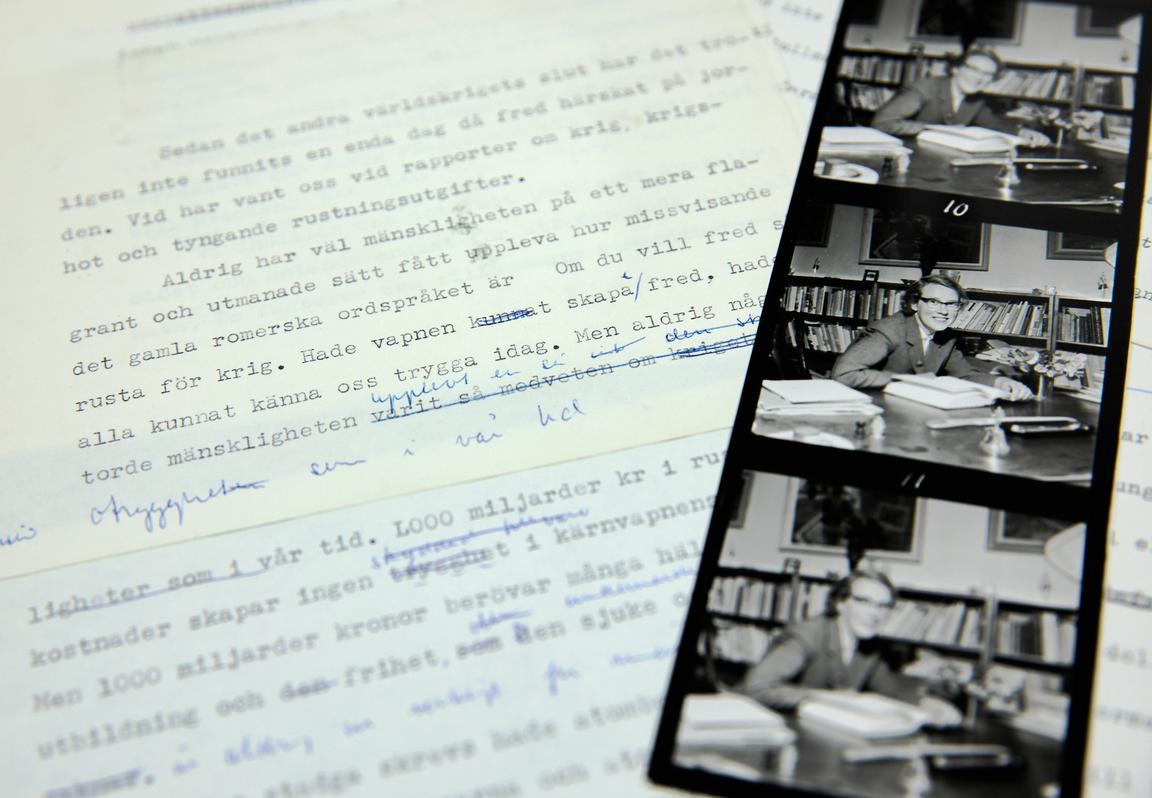
The Ingrid Segerstedt Wiberg archive (H 2003:15) is very large - some 22 shelf metres in all - and consists of documents sorted by subject, as well as correspondence, biographical materials and photos. The archive currently lacks an inventory.
The KvinnSam collections include the archive of Internationella kvinnoförbundet för fred och frihet (IKFF) - the Swedish branch of the Women's International League for Peace and Freedom where Ingrid was active.
Biography
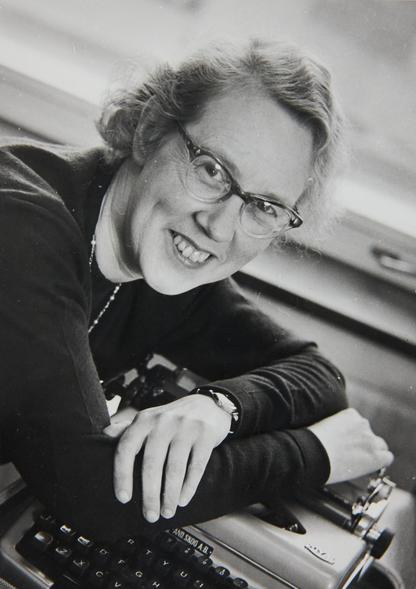
Ingrid Segerstedt Wiberg (1911–2010) was born in Lund, to professor and publicist Torgny Segerstedt (1876–1945) and Augusta Segerstedt (1874–1934) née Synnestvedt. Shortly after Ingrid's birth, the family moved to Stockholm and later to Gothenburg, where her father became editor-in-chief of the Göteborgs Handels- och sjöfartstidning in 1917.
In many ways, Ingrid would follow in her father's footsteps as a prolific debater and columnist, and as a peace activist and human rights advocate. In the years following the Second World War she worked as as a refugee therapist for the City of Gothenburg, and wrote articles where she fought to establish more humane refugee politics in Sweden. In the 1950s she began writing for newspaper Göteborgs-Posten where she would later become an editorial writer; likely one of the very first female editorial writers in Sweden. Ingrid was also politically active several times, and made a member of the Riksdag on behalf of Folkpartiet in 1956. During Ingrid's first year in the Riksdag she gained a reputation for being a motvalls kärring - a "contrary crone" - as the press would have it, "a woman who had no qualms about being a challenger, fully prepared to go against the grain, and stand up for her ideas" (from Ingrid Segerstedt Wiberg - den stridbara, by Christian Catomeris, p. 258). In 1967 her political party made Ingrid a delegate for the UN General Assembly. At this time, she had already been devoted for years to the Internationella Kvinnoförbundet för Fred och Frihet (IKFF) and served as chair of the Swedish section in 1975–1981.
Ingrid earned many awards and prizes, and in 1981 she was made an honorary doctor at the University of Gothenburg, for her efforts regarding peace and refugees. The year 2000 saw the opening of the Ingrid Segerstedt Gymnasium managed in her spirit; the school should promote tolerance, and reject racism and hostility against foreigners. The sculpture Aktivisten, portraying Ingrid Segerstedt Wiberg and commemorating her efforts, stands outside the Social Sciences library in Gothenburg since 2021. It was made by artist Johan Malmström.
The above text is partially based on Ingrid Segerstedt Wiberg, by Lisbeth Larsson.
Locate the archive
The archive has not been inventoried. Please contact the Manuscripts Section at the Humanities Library if you have any further questions about the Ingrid Segerstedt Wiberg archive.
Contact
Gothenburg University Library Manuscripts Section
Contact
Visit us
The Humanities Library
Renströmsgatan 4
405 30 GOTHENBURG
Read more
Additional archival materials relating to Ingrid Segerstedt Wiberg and her work concerning refugee aid can be found at Regionarkivet i Göteborg.
Catomeris, Christian, Ingrid Segerstedt Wiberg : den stridbara, Stockholm, 2023.
On Ingrid Segerstedt Wiberg via The Biographical Dictionary of Swedish Women (SKBL).
Webpage of Stiftelsen och vänföreningen Torgny Segerstedts minne