The Spitsbergen expedition of 1872-1873
The first Swedish overwintering expedition
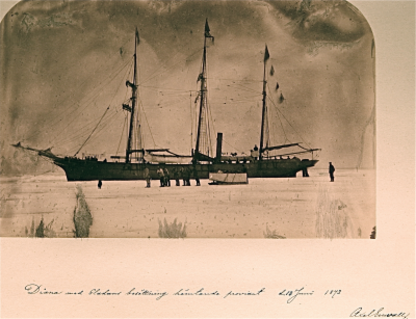
After the 1868 expedition, Oscar Dickson had informed A. E. Nordenskiöld that he would be willing to lend financial support to new Polar projects, and in early 1870, Nordenskiöld turned to him with a longer proposition about the demand and benefits of a new Swedish Polar exhibition, wherein Nordenskiöld outlined the intended tasks for such an expedition. The plans included the establishment of a station as far north as possible on Spitsbergen, to spend the winter there, and then set out for the North Pole in the following year. "In Gothenburg, the new expedition was met with such widespread interest that the requested funds were shortly raised." reported Frans Reinhold Kjellman in his account of the expedition. Contributions came, besides Oscar Dickson, from James, Robert and Charles Dickson, David Carnegie, John West Wilson, Johan Jakob Ekman and Oscar Ekman. A mail steamer was chosen as the vessel of the expedition, the Polhem, along with the Gladan, a brig, provided for the expedition by his Majesty the King of Sweden, as well as a steamer, the Onkel Adam, under merchant captain Leonard Clase från Onsala. The expedition members included, besides A. E. Nordenskiöld (1832–1901), senior lecturer Frans Reinhold Kjellman (1846–1907) from Uppsala, senior lecturer August Wijkander (1849–1913) (later known as professor and dean of Chalmers University of Technology), physician and photographer Axel Enwall (1844–1912) and Italian Navy Lieutenant Eugenio Parent (1845–1885). Captain of the Polhem was the later renowned Louis Palander (1842–1920) who would, a few years later, in 1878–1880, sail through the North East passage with Nordenskiöld.
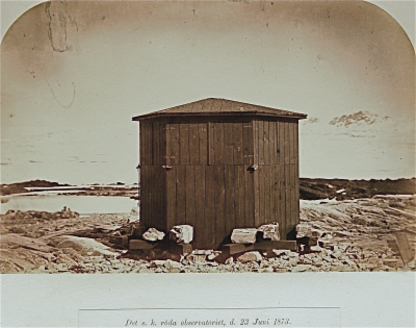
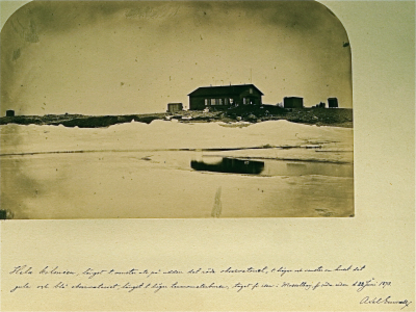
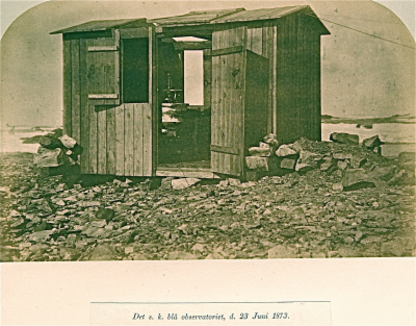
The plans for the expedition were to establish a winter station on Sjuöarna or as far north on the Spitsbergen north coast as possible. Here, astronomical, geomagnetical and meteorological observations etc. would be carried out during the winter. In addition, the ambition was to set out with sleds in the spring of 1873, to go north over the polar ice, to reach as northerly a latitude as possible. Further, biological and geological research was planned for the summer, around the coast of northern Spitsbergen.
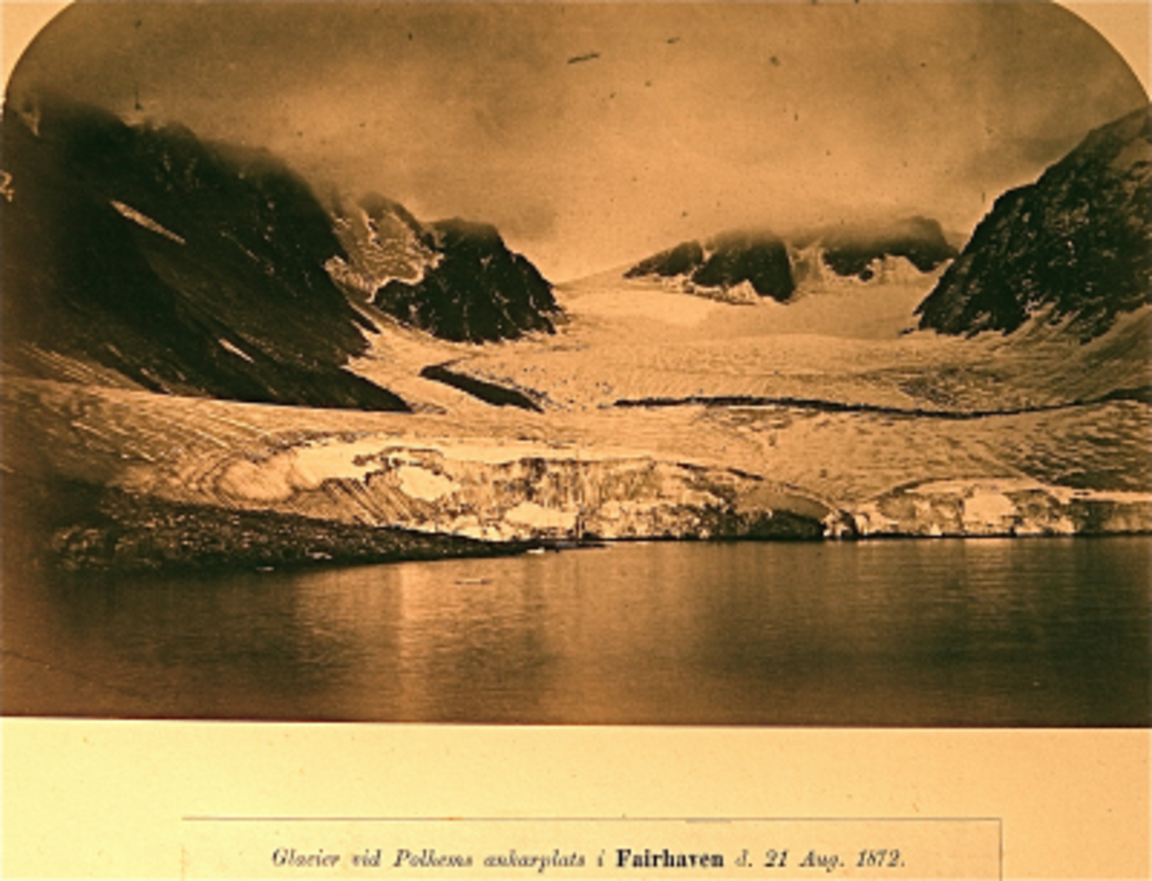
The expedition outfitting now went swiftly, and on July 4th 1872 the ships left the Gothenburg harbour. ”Slowly we steered out among the hundreds of ships that lay in the fairway, and bid the Queen of the Göta river a long farewell" writes Kjellman. August 2nd marked the arrival to Green Harbour in Spitsbergen, from which Nordenskiöld writes to Oscar Dickson ”Mr merchant, Sir. I take advantage of the opportunity presenting itself a few days from now, to send letters from here to Sweden with the steamer Mimer, to give you an account of the expedition so far. Thanks to the Lord, I can begin thus: All is well." However, the expedition soon ran into a variety of problems, including hindering ice, which prevented the establishment of the wintering station in the originally intended location, and placed it instead at Mosselbukten, located further south in northwestern Spitsbergen. Of the 40 reindeer brought along for use as draught animals, 39 escaped early on. Nordenskiöld mentions in his autobiography about the expedition that "we were pursued this time by perpetual bad luck."
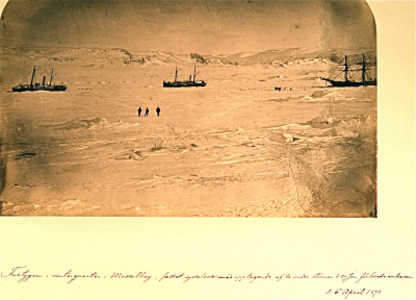
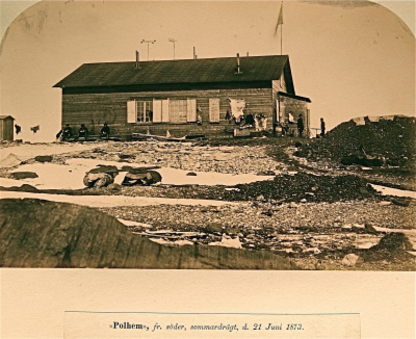
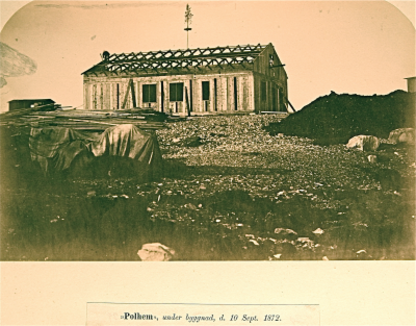
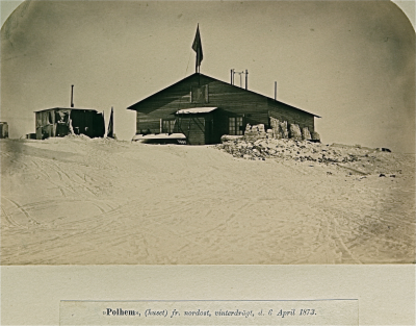
To make matters even worse, 57 Norwegian whalers appeared, having been caught in the ice and now hoping to find food and shelter for the winter with Nordenskiöld. Further, the two ships that had escorted the expedition from Gothenburg, and were scheduled to return before the winter, had also been trapped by the ice outside Mosselbukten by the wintering station, named Polhem for the expedition vessel. This meant that besides the 21 people who were to stay for the winter according to plan, another 67 people had come from the ships, and with the whalers there were 124 souls in all at the station.
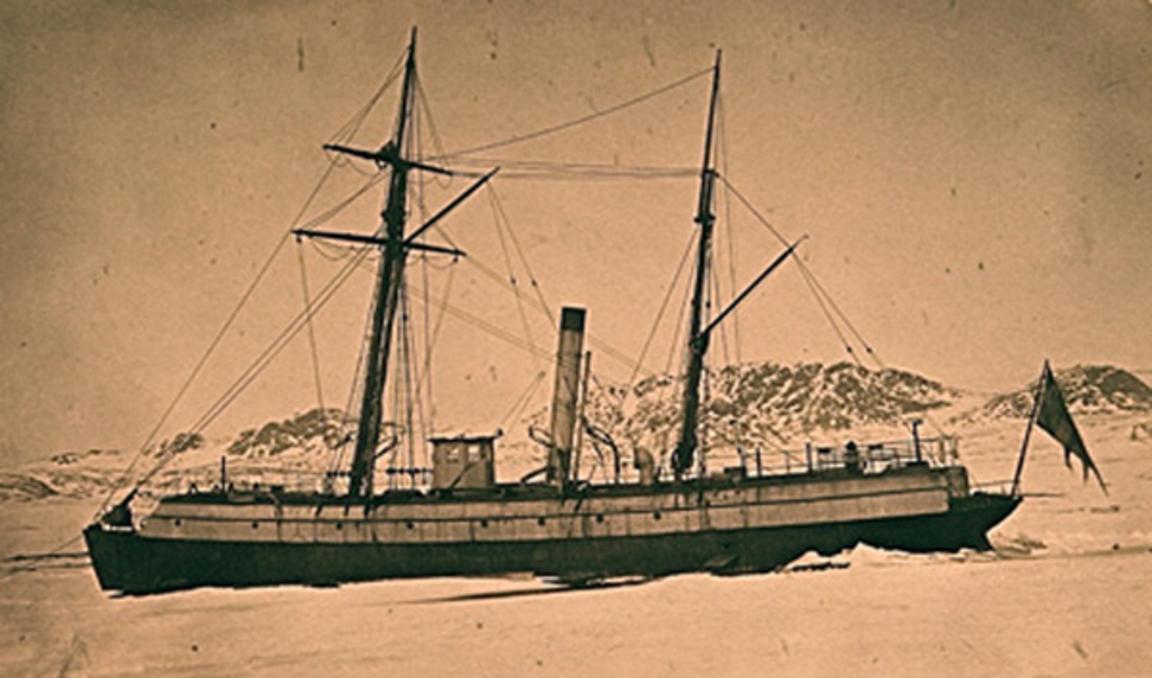
The situation was critical, and there was much worry back in Sweden, since neither the Gladan or the Onkel Adam had returned. Oscar Dickson presented an offer of 100 000 for a rescue expedition. However, this was postponed. Early on, however, Nordenskiöld had sent some of the whalers to what was known as Svenskhuset at Kap Thordsen by Isfjorden to spend the winter there. Despite ample supplies, every one of the 17 men who made it there died during the winter, possibly due to scurvy. New findings (2008) show that they likely died from lead poisoning. The remaining whalers outside Mosselbukten managed, in November, to free their ships from the ice, and happily reached Hammerfest and Tromsö in Norway.
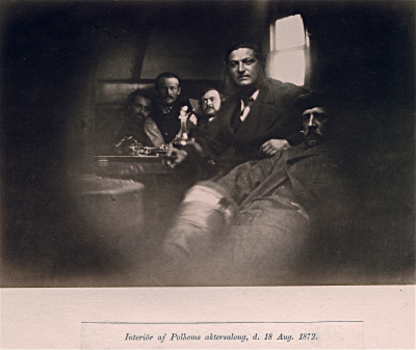
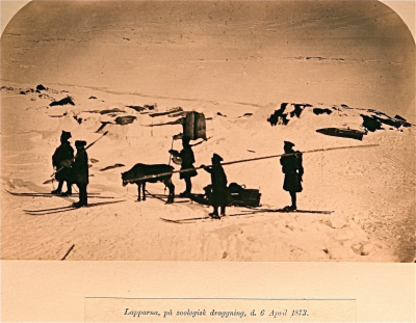
Conditions were thus not ideal, but there were no alternatives, and the winter was spent in the house built for the purpose, as well as aboard the ships. Conditions were harsh at times, with cold and scurvy, and two men died during the winter, however not from this disease. In the spring and early summer of 1873, Nordenskiöld and Palander along with nine men undertook a larger exploration of the inland ice of Nordostlandet, the first ever to be made. At the time, this area was virtually unknown, and for this reason particularly interesting from a scientific point of view. The men travelled by sled, first up to Sjuöarna and then east along the coast of Nordostlandet approximately to Cap Bruun where they went ashore on the inland ice and went west across it, via Wahlenbergfjorden to Mosselbukten where the party returned on June 29th. During the way across the inland ice, there was a constant risk of falling into glacier crevices, something that would have been fatal if it had happened. Several times, expedition members fell through, but were saved as they remaind hanging from the sled harnesses. From time to time, persistent foggy conditions posed an additional challenge.
The intended push towards the North Pole, or the most northerly latutide attainable, must be abandoned due to unfavourable ice conditions, and after some additional scientific work during the summer, the expedition arrived back in Gothenburg on August 29th. The Swedish expedition to Spitsbergen 1872–1873 was thereby ended. Unfortunately it had met with several issues and had become significantly more expensive than planned. Among its results are a series of measurements and data concerning meteorology, geomagnetism and marine biology, gathered during a year of observations. Further, the expedition increased the knowledge about the north coast of Nordostlandet and its inland ice. This was the last expedition carried out by Nordenskiöld with Spitsbergen as its goal. From this time on, other areas in the Arctic would attract his interest for the main part.
AL

Bibliography
- Erikson, C.B. Kapten Clases dagbok från svenska polarexpeditionens övervintring 1872-73, Ymer, p. 81-92, 1936.
- Kish, G. "North East Passage. Adolf Erik Nordenskiöld. His life and times", 1973.
- Kjær, K-G., Aasebø, U., Hultgreen, Tora. The tragedy at Kapp Thordsen, Spitsbergen, 1872–1873. Could lead poisoning have been the cause?, Polar Record, 46 (238), p. 200-209, 2010
- Kjellman, F.R. "Svenska polar-expeditionen år 1872-1873 under ledning af A.E. Nordenskiöld", Stockholm, 1875
- Kjellman, F.R. "Svenska polar-expeditionen år 1872-1873 under ledning af A.E. Nordenskiöld", Stockholm, 1875, E-BOOK (PDF project Runeberg)
- Larsson, Anders, Axel W. Enwall (1844-1912), Medical Doctor and Polar Photo Pioneer. In: "The coldest coast : the 1873 Leigh Smith expedition to Svalbard in the diaries and photographs of Herbert Chermside" . Ed. P.J. Capelotti., 31-69, Cham, 2021
- Nordenskiöld, A.E. Redogörelse för den svenska polar-expeditionen 1872-1873. (Bihang till Kongl. Vetenskapsakademiens handlingar, II:18, Stockholm, 1875
- Nordenskiöld, A.E. Redogörelse för den svenska polar-expeditionen 1872-1873. (Bihang till Kongl. Vetenskapsakademiens handlingar. Vol. 2, No 18. 1875.)(E-BOOK)