The Vega expedition through the Northeast Passage 1878-1880
The conquest of the Northeast Passage
Following the 1872–1873 overwintering expedition to Spitsbergen, Nordenskiöld's next project during 1875 was to use the economic contributions of Oscar Dickson to equip an expedition to the Kara Sea and the mouth of the river Yenisey where it meets the Arctic Ocean. The purpose of the expedition was to conduct scientific studies, as well as explore the opportunities for future shipping between Europe and Siberia. This expedition was highly successful, and a follow-up journey was undertaken in the following year, 1876.
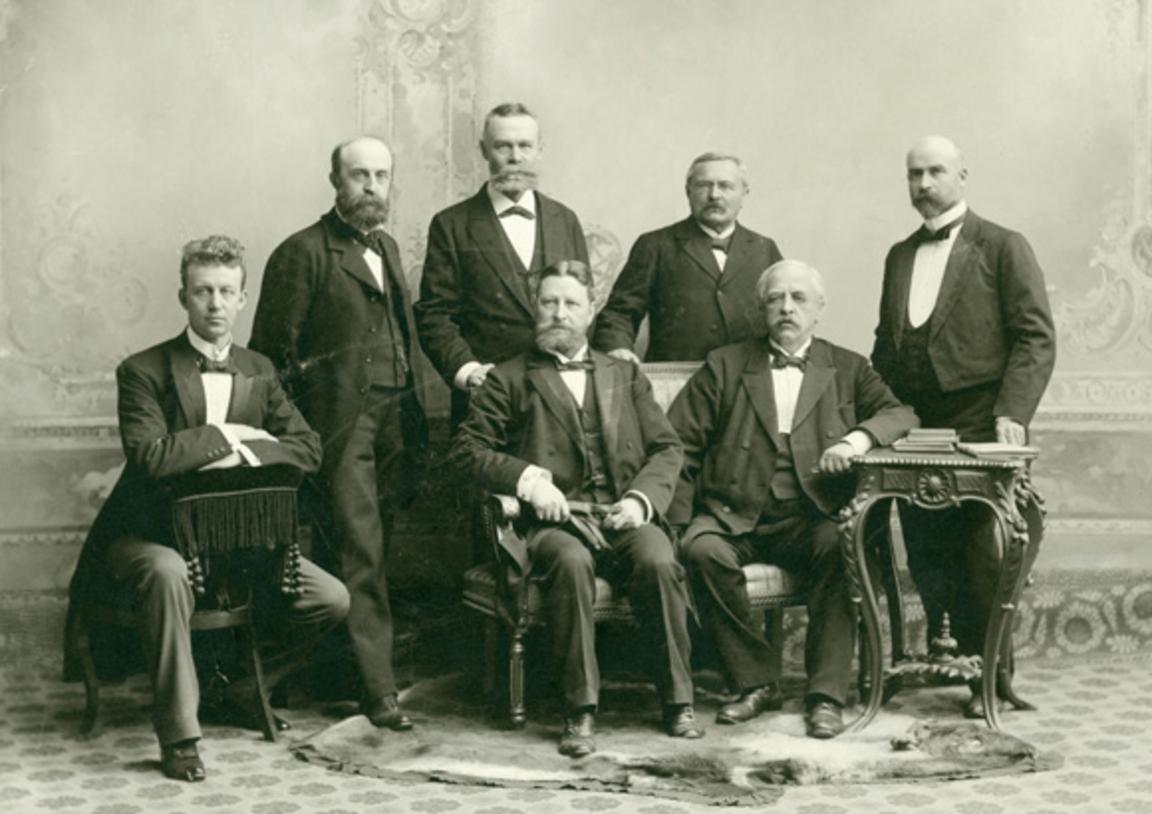
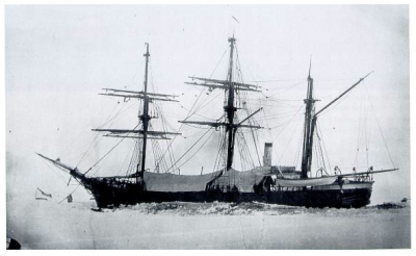
Bades on these successful endeavours, Nordenskiöld planned to extend his travels even further east, and at this time, the plans for his major undertaking as a polar researcher start taking shape, namely to go by ship around Europe and Asia from the north, thus completing a voyage through the Northeast Passage, which no ship had done at this time. One of the causes behind this initiative was, as for the two previous Siberian expeditions, to investigate the opportunities to establish future trade routes. A venture such as this would of course be very expensive, and the costs for the expedition were subsequently divided between King Oscar II, Oscar Dickson and Russian merchant Alexander Sibiriakoff. The ship chosen for the expedition was a barque, the Vega, bought for the purpose from the Ishafvet company, in Gothenburg. Along with its sister ship, the Capella, the Vega was used for seal-catching and whaling in the waters outside Greenland and Spitsbergen. After various preparations at the naval shipyard in Karlskrona, the Vega returned to Gothenburg in June 1878, where additional supplies and equipment for the long journey were brought on board. Here, the expedition was joined by members of the scientific crew, including Anton Stuxberg (1849–1902), zoologist, Frans Reinhold Kjellman (1846–1907), botanist, Ernst Almquist (1852–1946), physician, Giacomo Bove (1853–1887), Italian navy lieutenant and hydrographer, Andreas Peter Hovgaard (1853–1910), Danish navy lieutenant and hydrographer, and Oscar Nordqvist (1858–1925) Finnish guard lieutenant, the expedition's interpreter and cook.
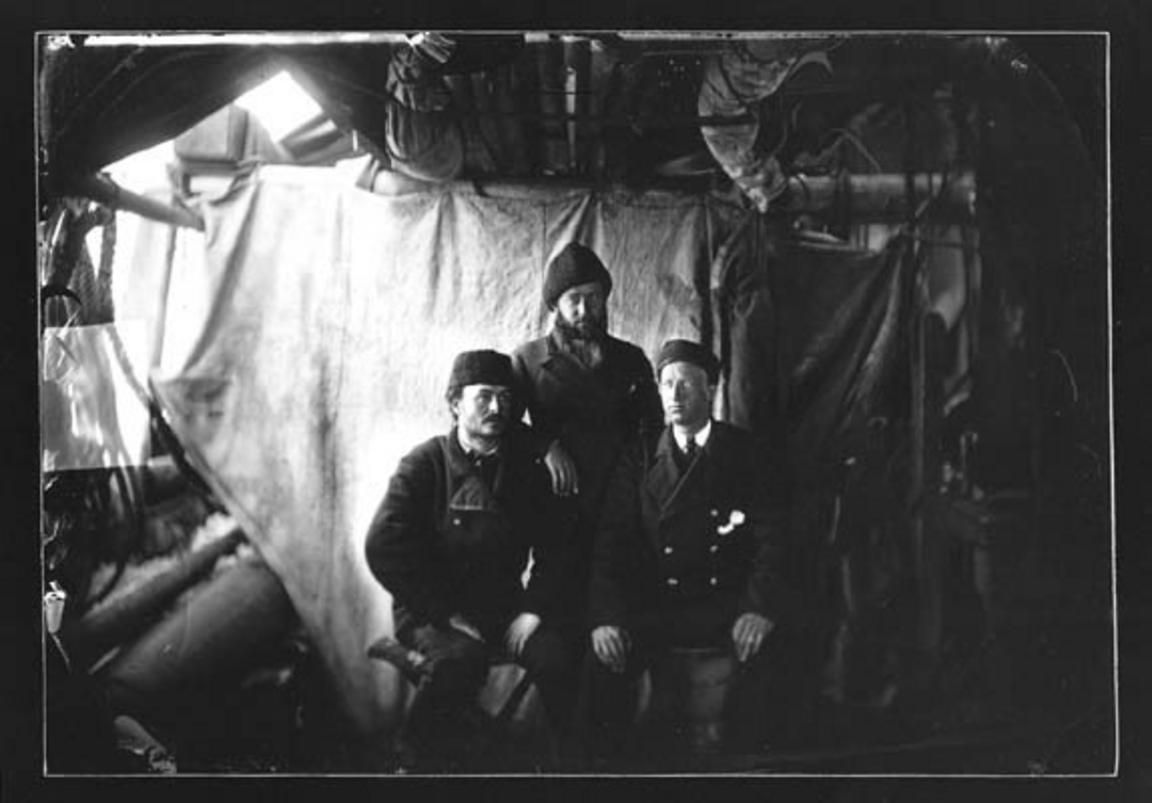
In other words, the expedition was very much an international one, according to the ideas presented by Carl Weyprecht about transnational collaboration. The Vega was crewed by men selected from the Swedish Navy, and was under the command of Captain Louis Palander (1842–1920) who had previously sailed with Nordenskiöld during the expeditions to Spitsbergen in 1868 and 1872–1873.
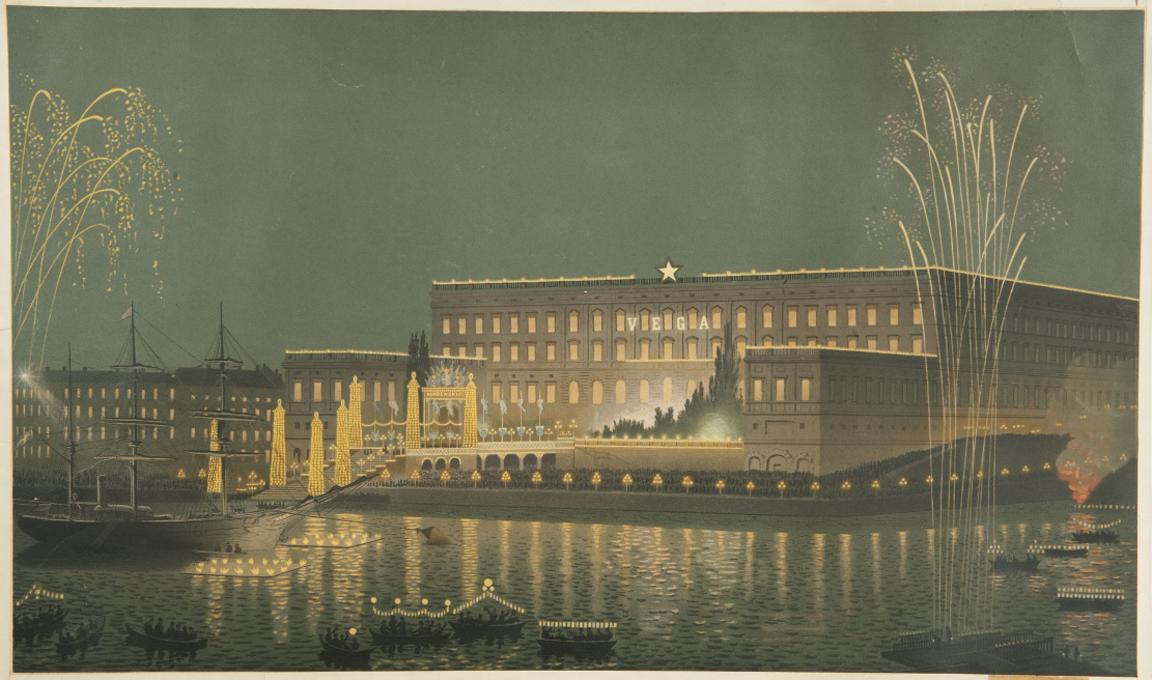
On the 4th of July 1878 it was finally time to depart, and the Vega left Sweden to embark on a journey that would last almost two years. After passing the North Cape and sailing east through the Kara Sea, the ship went around Cape Chelyuskin the northernmost point of Siberia. The expedition then continued east along the north coast of Siberia, through what is now known as the Laptev Sea, and reaching almost as far as the Bering Sound. This leg of the journey passed without any major issues or drama, though the conditions were very foggy at times. However, the ship was trapped in the ice just before the sound, and the expedition was forced to spend the winter in a place called Pitlekaj. They had very nearly succeeded in sailing through the Northeast Passage in just one season. The enforced overwintering did however yield a rich scientific result, and the crew enjoyed much social interaction with the local indigenous population, the Chukchi people. The Chukchi were short on provisions of many kinds, which the expedition was able to provide for them, including food rations. The ice remained for the longest time, and it was not until July 1879 that the Vega managed to break free and continue on its way to Europe via Japan. The return journey gradually became an outright triumph, and wherever the ship passed, the expedition was subject to grand celebrations of all sorts. The return to Stockholm on April 24th, 1880, when the Vega sailed to the Stockholm Palace to be received by King Oscar II and a throng of cheering spectators, was of course the grand finale. This day is still celebrated as the Vega Day in the Swedish calendar. The nationalist spirit was at its peak and Oscar Dickson was raised to nobility, while Nordenskiöld and the ship's captain Louis Palander were given titles, medals and lifelong annual grants from the state.
Bibliography
- Garting, B. (pbl.) Sven Anderssons journal förd å ångfartyget Vega under expeditionen åt Norra Ishafvet, åren 1878-1879, Föreningen Gamla Carlskrona Årsbok, Karlskrona, 1979
- Kish, G. North East passage. Adolf Erik Nordenskiöld. His life and times, Amsterdam, 1973.
- Nordenskiöld, A.E. Vegas färd kring Asien och Europa jemte en historisk återblick på föregående resor längs gamla världens nordkust, Vol. 1-2, Stockholm, 1880-1881
- Nordenskiöld, Adolf Erik Vegas färd kring Asien och Europa jemte en historisk återblick på föregående resor längs gamla verldens nordkust Förra delen, Stockholm, 1880 (E-BOOK)
- Nordenskiöld, Adolf Erik Vegas färd kring Asien och Europa jemte en historisk återblick på föregående resor längs gamla verldens nordkust Senare delen, Stockholm, 1881 (E-BOOK)
- Nordenskiöld, A.E. (pbl.) Vegaexpeditionens vetenskapliga iakttagelser bearbetade av deltagare i resan och andra forskare. Vol. 1-5, Stockholm, 1882-1887
- Stuxberg, A. Minnen från Vegas färd och dess svenska föregångare jämte en kortfattad framställning av Nordostpassagens historia och den amerikanska nordpolsexpeditionen under De Long, Stockholm, 1890
- Stuxberg, A. Minnen från Vegas färd och dess svenska föregångare jämte en kortfattad framställning av Nordostpassagens historia och den amerikanska nordpolsexpeditionen under De Long, Stockholm, 1890 (E-BOOK)