
Codices Graeci et Latini
The library's Codex Collection (Codices Graeci et Latini), includes the majority of our Medieval manuscripts in Latin and Ancient Greek.
About the collection
A codex refers to the format we usually call a book. Meaning a number of leaves gathered in sections or "signatures" - a group of sheets folded in half and bound together, frequently inside a hard cover, to form a unit. More specifically, in the context of book history, it is the term that came into use to separate bound texts from those written on scrolls. Today, the term codex implies older manuscripts, created before the introduction of printing in Europe. However, this definition is by no means absolute.
Compared to the holdings of many other, larger libraries, the Gothenburg University Library collection of Medieval manuscripts is rather humble, but still covers a wide range of subjects mirroring Medieval book production. The Codex Collection consists of four volumes in Ancient Greek and 36 in Latin. The origins of the collection can be traced largely to one of the library's main benefactors, Vilhelm Lundström. With contributions (6 500 SEK, about 400 000 SEK in present-day money) from five donors in Gothenburg, Lundström visited antiquarian bookseller Jacques Rosenthal in Münich in 1907, to purchase a total of 22 manuscripts. Before his death in 1940, Lundström acquired another eight manuscripts on behalf of the library, meaning he assembled three quarters of the extant collection. In addition, the library has actively purchased another eight manuscripts, while two more have been sourced from the Hvitfeldstka collection in 1967.
![Dionysios Periegetes [De situ orbis], with comments by Eustathios. (Codex Grek 1).](/sites/default/files/styles/large_auto_height/public/2025-02/Codex%20Grek%201.jpg?itok=n53vfqRO)
In connection with the library’s 50th anniversary in 1941, Tönnes Kleberg made a catalogue of the Codex Collection as it was at the time. The below descriptions are based on his catalogue. In true Classicist spirit, Kleberg wrote the catalogue in Latin, making it perhaps somewhat less accessible to the majority of potential readers. The catalogue was not entirely finished, largely due to the Second World War, which was ongoing at the time. However, Kleberg resumed his work three decades later, producing a second edition, both amended and expanded. This includes four manuscripts in Ancient Greek, and 35 manuscripts in Latin. After this, another manuscript has been added to the Codex Collection, which thereby includes 40 items in all.
Further codices are present elsewhere in the library holdings, but these have been acquired after the creation of the Kleberg catalogue. For various reasons, these works have not been incorporated into the Codex Collection as such, but have other shelfmarks. Some of these additional manuscripts are described below.
As a final aside in the history of the collection, it should be mentioned that the five donors that provided the means for the original acquisition were Henrik Ahrenberg, C. A, Kjellberg, Ivar Waern and Erik Wijk. The fifth donor remains unnamed, but the library is equally grateful to this unknown benefactor.
Timespan
About half of the manuscripts are from the 15th century, and a fourth from the 14th century. The collection further includes four manuscripts from the 13th century, one from the 12th century, and the oldest one, from the 10th or the early 11th century. In addition, there are four manuscripts from the 17th century, indicating the difficulties in establishing any strict, chronological boundaries for what should be considered valid items in a collection of this kind.
Topics
Despite the fact that the Codex Collection is rather small, it includes a vast range of subjects, such as epic poems, comedies, tragedies, collections of proverbs, history, philosophy, biographies, works on war and agriculture, and a lunar calendar. Naturally, several manuscripts with ties to religion also feature in the collection, including bibles, psalters, breviaries, theological works and a gradual.
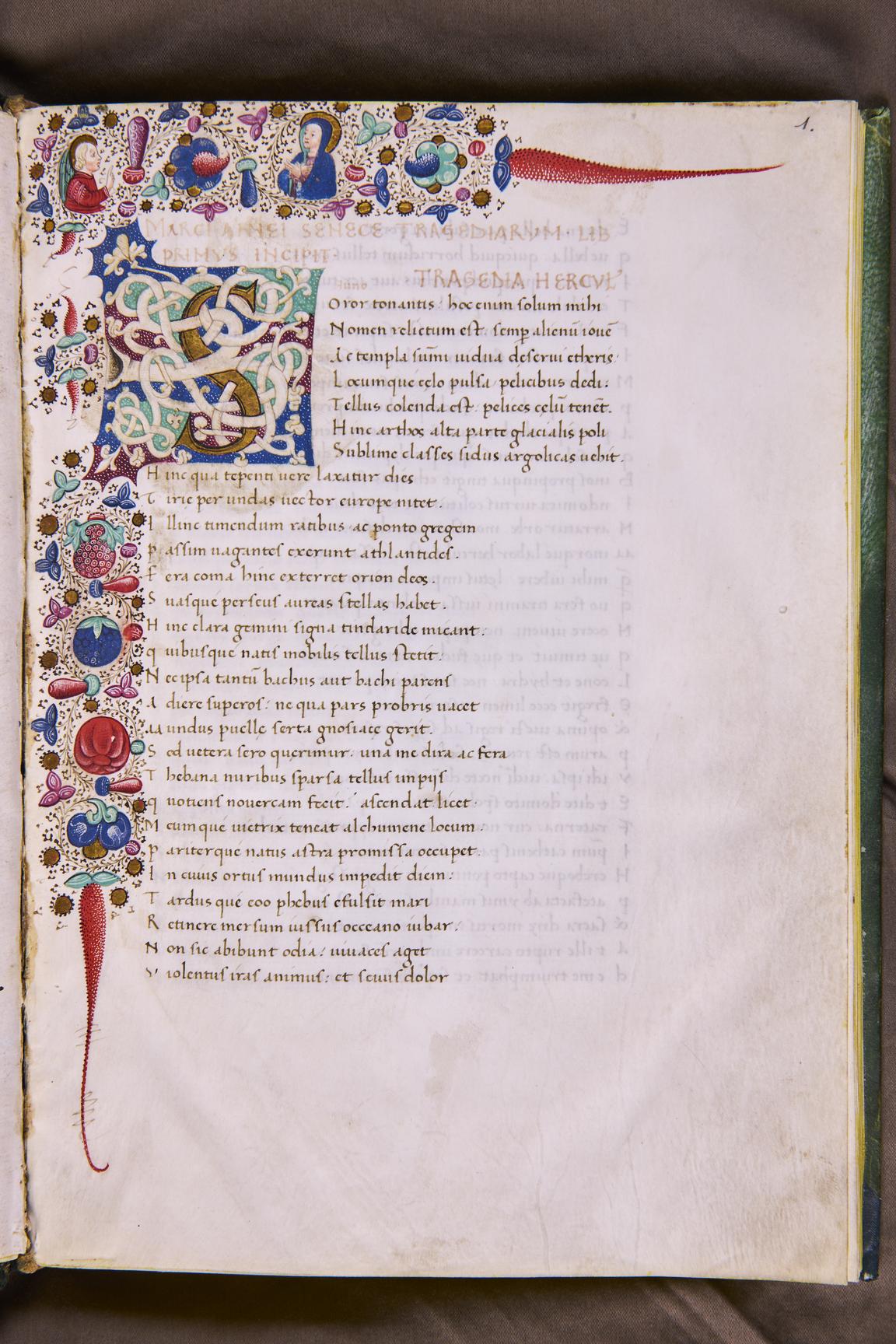
In the section classified by modern standards as fiction are four manuscripts of comedies by Roman author Terence, renowned throughout the Middle Ages for his excellent Latin, and for the many phrases he coined which were later adopted as proverbs. In addition, there are two volumes of tragedies by Seneca the Younger, probably better known in our own time as a Stoic philosopher. There is also one manuscript of Virgil’s pastoral poems, Bucolica, and his instructive poem on agriculture, Georgica.
Some of the manuscripts mirror the process of learning to write correctly, such as the Ars scribendi epistolas from the 15th century, or various collections of proverbs and maxims, such as the Catonis Disticha, found in one codex from the 14th century and in another, bilingual codex written in both Latin and German in the 15th century.
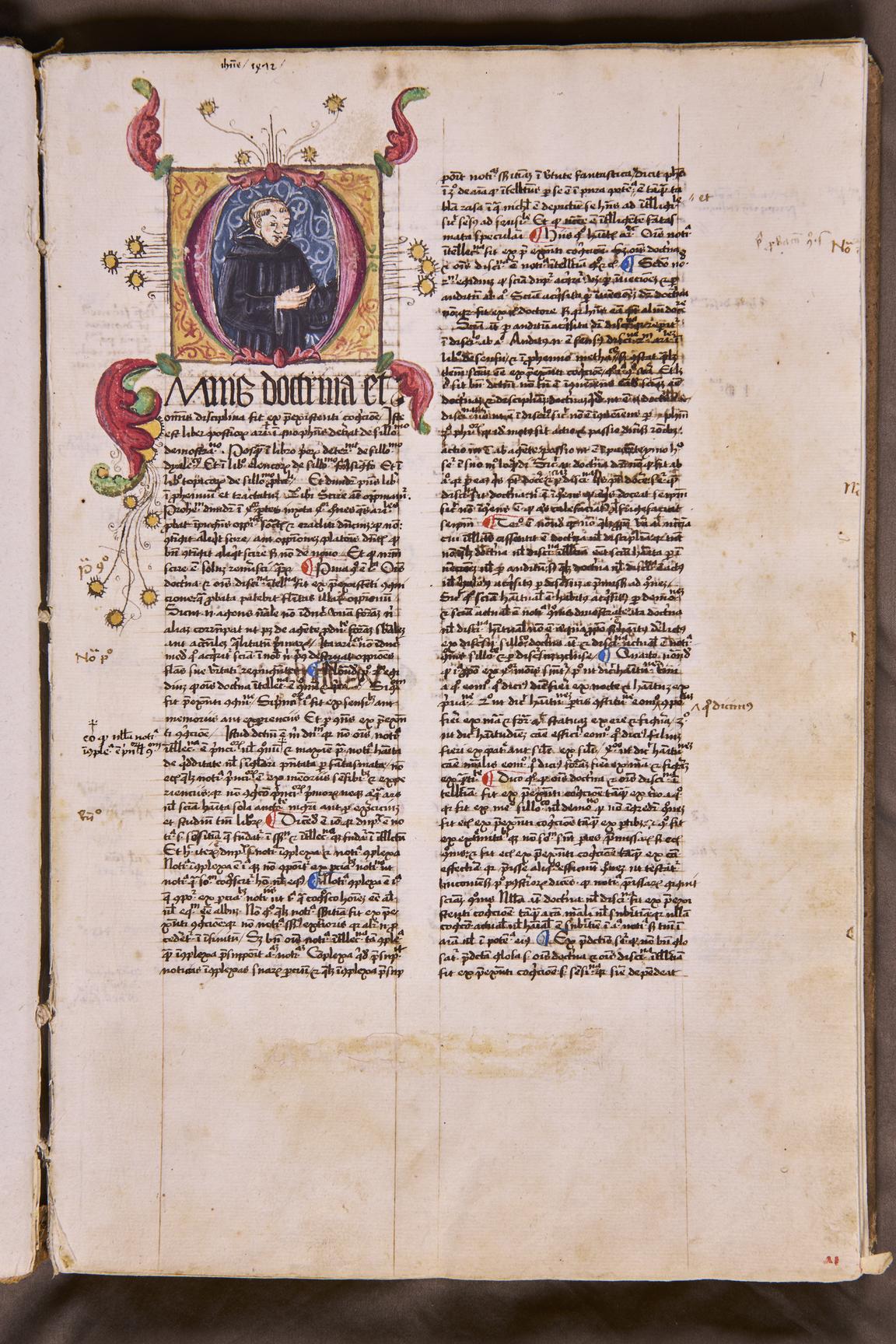
Within philosophy, there are several manuscripts in the collection that gather texts from various philosophers alongside theological works and other types of reflections on mankind. Aristotle features in several of these collections, along with works by Lactantius and Cassiodorus, and by physicians such as Galen and Avicenna.
The art of war is treated by Publius Flavius Vegetius Renatus in his summary Epitoma rei militaris. A more peaceful approach is represented by Columella in his two books on agriculture and trees: De re rustici libri and Liber de arboribus.
The religious works in the collection include a 13th century bible, written in a Gothic hand as reverential as it is beautiful, and a 15th century breviary from the Skepplanda church.
The oldest item in the collection is a codex mentioned by Kleberg as Lunare, tonitrunale etc, containing a lunar calendar and a thunderstorm calendar. The moon's itinerary across the sky ought to be relatively easy to predict, but the thunderstorm calendar presented the somewhat optimistic notion that thunder, too, could be predicted throughout the year. This codex is from the late 10th or early 11th century, and might possibly be from Italy or Gaul.
The codex not found in Kleberg's catalogue is a Spanish gradual from the late 13th or early 14th century. This is the largest codex in the collection, and often requires two people for lifting it off the shelf. The gradual contains texts and music notes for the portions of mass that were sung, (the introitus, graduale, offertorium and communio). The size of the codex mirrors the fact that several singers shared the same sheet music, which required large enough leaves (and a large enough codex) for it to be read at some distance.
The 17th century
As mentioned above, the Codex Collection also includes four manuscripts from the 17th century. Two of these are texts by Marcus Antonius Palumbus who taught philosophy and theology in Naples in the first half of the 17th century. The two other works are an introduction to the logic of Aristotle, and a psalter. Even if these works are not strictly Medieval manuscripts, they are a good example of the fact that manuscripts did in no way disappear with the arrival of the art of printing.
Other manuscripts
Beyond the Codex Collection, there are various other manuscripts in the library holdings. Among the most beautiful ones is a Flemish work from the 13th century, with a likely contemporary binding. An item made somewhat is a handwritten Gospel of John, in Ge’ez, an ancient South Semite written language.
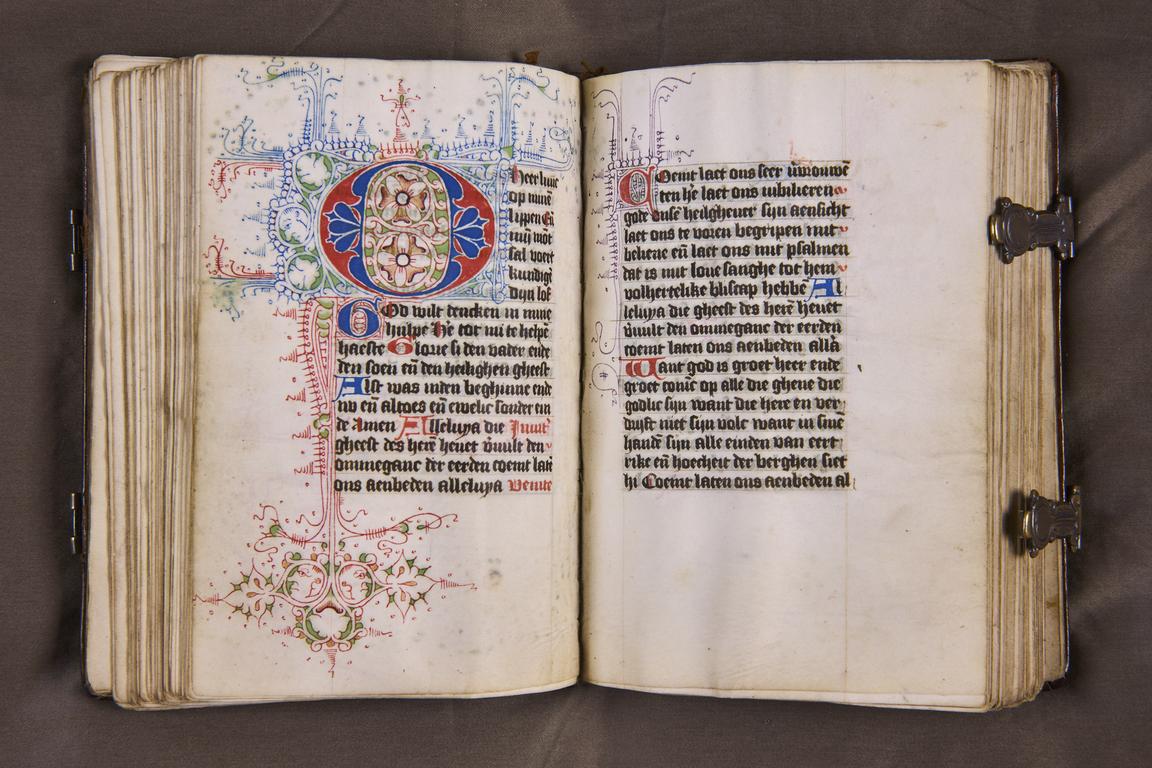
Catalogus codicum graecorum et latinorum
Below is a truncated list of Kleberg's Catalogus codicum graecorum et latinorum, with rough translations of the titles, as well as notes on origins, materials and time periods.
Ancient Greek
1. Dionysios Periegetes (lived around CE 300): [The known world], with comments by Eustathius of Thessalonica (d. ca 1194). A cosmographic, epic poem in hexameter. Unknown origins. From the late 14th or early 15th century. Written on paper and parchment. Some leaves restored or replaced (written in a later hand) and added to the former ones.
2. [Letters of Paul]. 15th century. Beginning of codex damaged. Unknown origins. Written on parchment. Provenance: Biblioteca Estense (family library of the House of Este) in Modena, taken from there in the early 19th century, after 1820, and closely related to another codex still (1973) in the Este library.
3. New testament. First half of 14th century. Written on paper. Possibly compiled from different groups of signatures, but now damaged to the point that it is difficult to determine how the leaves are connected. Beginning and end damaged, with damp-stains throughout.
4. [The lives of holy women], mainly taken from the Menologia by Symeon Metaphrastes. 14th century, written on parchment. A hagiography including not only female saints but also a number of male ones. According to a note in the codex, it was likely intended for use among the women of the nunnery at Omala, founded in 1580 in Kefallinia, and dedicated to Saint Gerasimos.
Latin
1. Terence (born ca 195 BCE in Carthage, died 159 BCE): Comedies: Andria (The Girl from Andros), Eunuchus (The Eunuch), Heauton Timorumenos (The Self-Tormentor), Adelphoe (The Brothers), Hecyra (The Mother-in-law), Phormio (The Parasite). Second half of 15th century. Written on parchment. Originally from the south of France or possibly northern Italy. With annotations in different hands. On the last page is a decorative illumination, depicting a human tongue placed in a sort of torture instrument made from two rods, with the words Parles. de. vois. It is highly uncertain what this alludes to. It might mean that those who speak of themselves ought to keep their tongue in check.
2. Terence (born ca 195 BCE in Carthage, died 159 BCE): Comedies: Andria (The Girl from Andros), Eunuchus (The Eunuch), Heauton Timorumenos (The Self-Tormentor), Adelphoe (The Brothers), Hecyra (The Mother-in-law), Phormio (The Parasite). Italy, 14th century. Written on paper.
3. Terence (born ca 195 BCE in Carthage, died 159 BCE): Comedies: Eunuchus (The Eunuch), Heauton Timorumenos (The Self-Tormentor), Adelphoe (The Brothers), Hecyra (The Mother-in-law). Possibly Italy, 14th century. Written on parchment.
4. Terence (born ca 195 BCE in Carthage, died 159 BCE): Comedies: Andria (The Girl from Andros), Eunuchus (The Eunuch), Heauton Timorumenos (The Self-Tormentor), Adelphoe (The Brothers), Hecyra (The Mother-in-law), Phormio (The Parasite). Italy, second half of 15th century. Written on parchment.
5. Virgil (born 70 BCE, died 19 BCE.): Eclogae et Georgica (Bucolica och Georgica). Possibly Germany, 15th century. Written on parchment and paper.
6. Publius Papinius Statius (ca. 45–96): Thebais et Achilleis. Italy. Second half of 14th or first half of 15th century. Written on parchment. The codex is heavily damp-stained and the last portion is damaged. The Achilleis text seems to have been divided into five books, four of which remain in a mutilated manuscript. At the end of Thebais are the letters R. A., possibly the initials of the scribe.
7. Justin, (Marcus Junianus Justinus) (3rd century CE): Historia Philippicae et Totius Mundi Origines et Terrae Situs (a summary of the universal history by Gnaeus Pompeius Trogus). Italy, 14th century. Written on parchment. [The universal history of Pompeius Trogus] (first century BCE) consisted of 44 books. The original is lost, and only exists as the summary by Justin.
8. Aristotle (384 BCE–322 BCE): Historia animalum interprete Michaele Scotto (The history of animals, translated by Michael Scot (ca 1175–ca 1235), Galen of Pergamon (129–216 CE): Anatomia uiuorum (Anatomy of the Living, attributed to Galen), Avicenna (ca 980–1037): De anima (On the Soul) and Physica (Physics), Mohammad Ghazali (1050–1111): Metaphysica (Metaphysics), Isaac Israeli ben Solomon (ca 832–932): Liber de elementis (The Book of Elements), etc. Great Britain, likely Oxford. Second half of 13th century. Written on parchment.
9. Iulius Brigida Auersanus: Introductiones in Aristotelis logicam. 1684. Written on paper.
10. Marcus Antonius Palumbus (taught philosophy and theology in Naples, died in 1644): In quaestiones et articulos in totum tractatum logices. 1605. Written on paper.
11. Marcus Antonius Palumbus: Eiusdem In disputationes et quaestiones physicas cum libris de caelo et mundo. 1606. Written on paper..
12. Paulo Nicoletti of Venice (1369–1429): Commentaria in libros posteriorum Aristotelis. (Commentary to Aristotle's text on scientific theory and submission of evidence, which constitutes part four in the anthology on logic, the Organon). 15th century. Written on paper.
13. Gregorius Magnus (Pope Gregory I: ca 540-604): Cura pastoralis [On pastoral care], Iacobus Carthusiensis (Jacob of Juterbogk, ca 1381–1465): Quodlibetum statuum humanorum [On Man's duties in the various stages of life], Johannes de Indagine (also known as John of Hagen, ca 1415–1475): Tractatus de simonia [Tractate on Simony]. Germany, 15th century. Written on parchment and paper.
14. Thomas Brabantinus Cantipratanus (Thomas of Cantimpré 1201–1272): Boethii de disciplina scholastica [On the Scholastics of Boethius], Ioannes de Sacrobosco (Johannes de Sacrobosco), ca 1195–1296): De sphaera [On the Sphere of the World - an introduction to astronomy]. Southern France. Second half of 13th century or 14th century. Written on parchment.
15. Catonis Disticha [Collection of proverbs and moralities] by an unknown author, ca 3rd to 4th century. One of the more popular texts in the Middle Ages, used both as a Latin primer and as a moral compass. Unknown origins. 14th century, written on parchment.
16. Cassiodorus (Cassiodorus, ca 490– ca 585): De anima [On the Soul]. Germany, second half of the 15th century. Written on paper.
17. [Attributed to] Phalaris (Phalaris of Akragas, ca 565-549 BCE) : Epistolae [Letters], Lactantius (ca 250–320 CE) : De iustitia dei fragmentum [On the Justice of God], Aristotle (384-322 BCE) : Oeconomicorum lib. I interprete Leonardo Aretino [Book of Economy, interpreted by Leonardo Aretino]. Italy, 15th century. Written on paper.
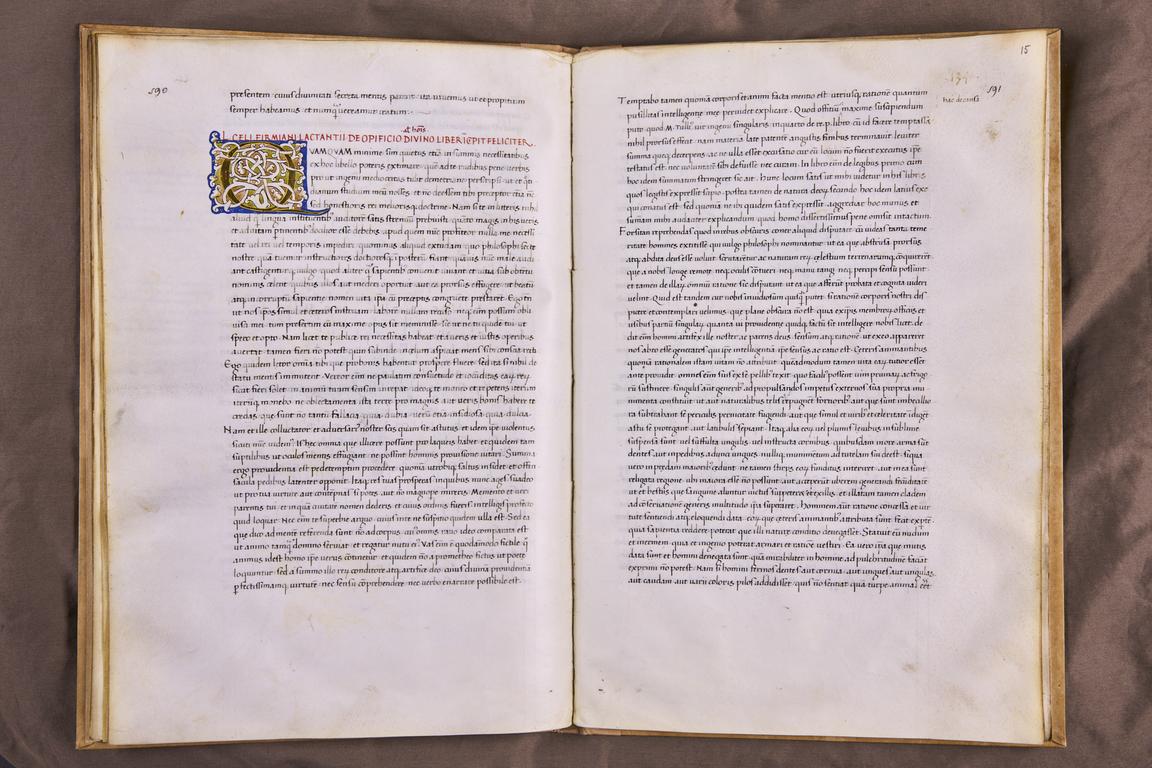
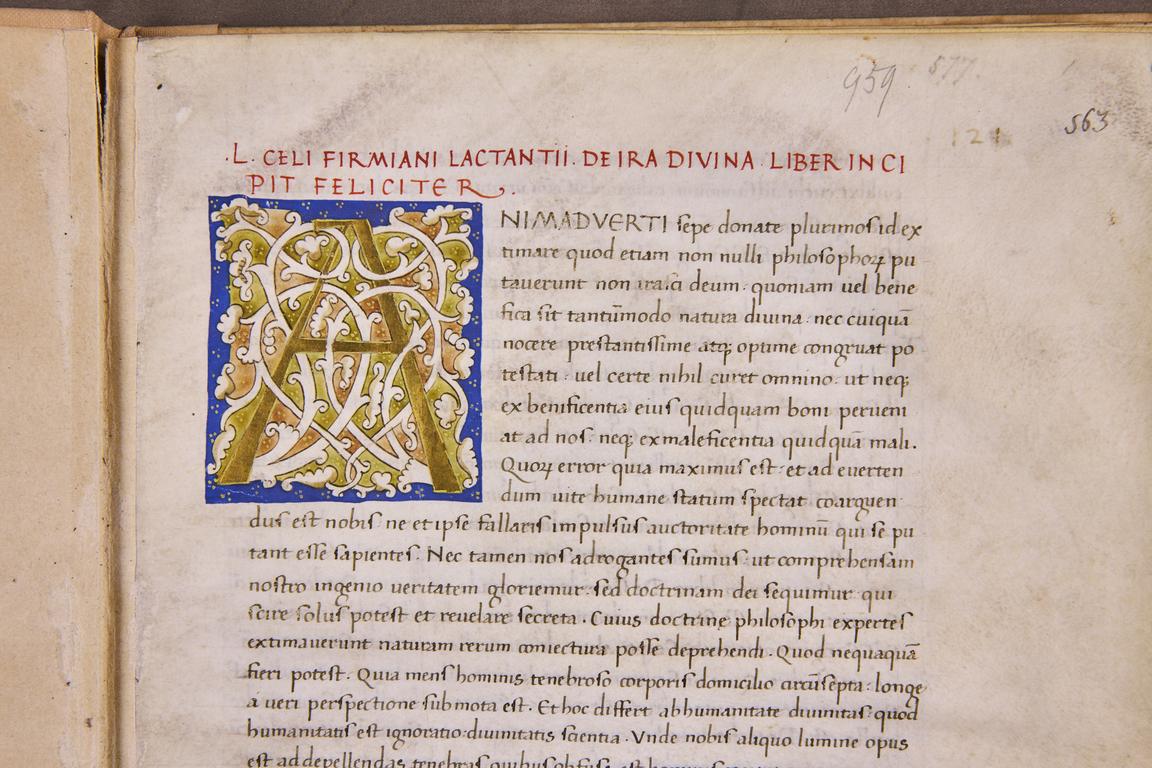
18. Lactantius (Lactantius ca 250–320 CE): De ira diuina [On the divine wrath], De opificio diuionu [On the works of the divine], Epitome diuinarium institutionum [On the divine institutions]. Italy, first half of 15th century. Written on parchment.
19. Valerius Maximi (Valerius Maximus, 1st century CE): Factorum et dictorum memorabilium IX [Nine Books on Memorable Deeds and Sayings ; a moralising collection of anecdotes]. Italy or South Germany. 15th century. Written on paper.
20. Seneca (Seneca the Younger, ca 4 BCE–65 CE): Tragodiae quattour. [Four Tragedies: Hercules, Thyestes, Oedipus, Thebais]. Northern Italy, 15th century. Written on parchment.
21. Petrus Lombardus (Petrus Lombardu, ca 1095/1100-1160 CE): Vita Pilati [Life of Pilate]. De morte Senecae [The death of Seneca]. Vita Iudae Ischarioth [Life of Judas Iscariot], etc. Southern France, late 12th century, Written on parchment.
22. Vegetius (Publius Flavius Vegetius Renatus, late 4th century CE): Epitoma rei militaris [On the art of war]. Italy, second half of 15th century. Written on paper.
23. Iohannis Hildesheimensis (John of Hildesheim 1310/1320-1375): Gesta et translationes trium regum [Deeds of the three kings, with translations]. Western Germany, 1465. Written on paper.
24. Sallust (Gaius Sallustius Crispus, 86 BCE-34 BCE): Opera [Works]. Ciceronis in Sallustium inuectiua [Cicero's invectives on Sallust]. Italy, second half of 15th century. Written on parchment.
25. Lunare, tonitruale etc. Lunar calendar and thunderstorm calendar, meaning predictions of thunderstorms in the year to come. 10th or 11th century. Italy or Gaul, cfr Svenberg: De latinska lunaria, 1936. Written on parchment.
26. Seneca (Seneca the Younger, ca 4 BCE-65 CE): Tragoediae [Tragedies: Hercules furens, Thebais, Hippolytus, Oedipus, Troades, Medea, Agamemno, Octauia, Hercules Oetaeus]. Italy, 14th to 15th century. Written on parchment.
27. Flavius Blondus (1392-1463): Roma instaurata [Rome Rebuilt]. Northern Italy, second half of 15th century. Written on paper.
28. Columella (4-70 CE): De re rustica libri [Books on Agriculture] & Liber de arboribus [The Book of Trees]. Italy, second half of 15th century. Written on paper.
29. Psalterium feriale [Psalter for the days of the week]. Rome, 1660. Written on parchment. Large folio.
30. Catonis Disticha et Facetus latine et germanice (See no 15, in Latin and German). South Germany, 15th century. Written on parchment.
31. Henricus de Frimaria (Heinrich of Freimar the Elder, ca 1245–1340): Tractatus de decem preceptis [Dissertation on the ten commandments]. Henricus de Langenstein (Heinrich of Langenstein 1325–1397): Tractatus de falsis prophetis [Dissertation on false prophets], Tractatus bipartitus de contractibus [Dissertation on contracts], Quaestiones pertinentes ad mercatores [Questions regarding merchants]. Augustinus de Ancona (Also known as Augustinus Triumphus, 1243–1328): Tractatus super Ave Maria [Dissertation on the Hail Mary]. Theodoricus de Elrich: Tractatus de contractibus emptionis [Dissertation on purchase deeds], Pertinencia ad bene esse [On the relevance of ”bene esses”], Disputatio apud universitatem Pragensem saec. XIV habita, [A discussion at the University of Prague in the 14th century.] Iohannes de Caldrinis: Collecta de contractibus censuum ad reempcionem et ad uitam [A collection of rental contracts], Compendium de ymaginibus uirtutum et uiciorum [On virtues and sins] Iacobus de Vitriaco (Jacques de Vitry, 1160/70–1240): Historia Hierosolymitana abbreuiata [A brief history of Jerusalem]. Burchardus de Monte Sion (Burchard of Monte Sion, 1200-talet): Descriptio Terrae Sanctae [A description of the Holy Land]. First half of 15th century. Written on parchment and paper.
32. Ars scribendi epistolas (Summa dictaminum) [The art of writing letters, a summary]. Germany, Leipzig, late 15th century. Written on paper. Bound together with an edition of Cicero's De Inventione, printed in Venice 1487.
33. Biblia sacra latina Vulgatae uersionis cum prologis (Bible). Northern France, second half of 13th century. Written on parchment.
34. Biblia sacra latina Vulgatae uersionis cum prologis (Bible). Northern France, second half of 13th century. Written on parchment.
35. Breuiarium secundum ritum ecclesiae Arosiensis (Skepplanda breviary). Sweden, first half of 15th century. Written on paper.
36. Gradual. Likely from Spain. 13th or 14th century. Written on parchment.
Locate the collection
Please contact the Manuscripts Section at the Humanities Library if you have any further questions about the Codex Collection.
Contact
Gothenburg University Library Manuscripts Section
Contact
Visit us
The Humanities Library
Renströmsgatan 4
405 30 GOTHENBURG
Read more
Kleberg, Tönnes. Catalogus codicum Graecorum et Latinorum Bibliothecae Universitatis Gothoburgensis, Acta Bibliothecae Universitatis Gothoburgensis, Göteborg, 1974
Svenberg, Emanuel. De latinska lunaria : text och studier, Eranos, Göteborg, 1936